

The term “Glock switch” has become increasingly searched due to its appearances in legal cases, law-enforcement warnings, and public debate. But what exactly is a Glock switch, and how does U.S. law regulate it and firearms more broadly? This article breaks down the legal landscape in clear, factual terms.
What Is a Glock Switch?
A Glock switch is a small device that converts a semi-automatic Glock pistol into a fully automatic firearm by altering how the trigger resets. Once installed, a single trigger pull can fire multiple rounds automatically without releasing the trigger — functionally making the pistol operate like a machine gun.
Even if the device is not installed or is just in your possession, federal law classifies it as a machine-gun part, because it is designed solely to convert a firearm into automatic fire.
Federal Laws Governing Glock Switches and Firearms
In the United States, several major federal statutes regulate machine guns and conversion devices like Glock switches: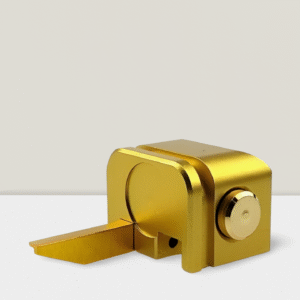
1. National Firearms Act (NFA) of 1934
The NFA was the first major federal law regulating firearms deemed especially dangerous — including machine guns, short-barreled rifles, and certain accessories. Under 26 U.S.C. § 5845(b), the legal definition of a “machine gun” includes:
any part designed and intended solely and exclusively… for use in converting a weapon into a machine gun.
This directly applies to Glock switches, which are designed solely to convert pistols to fully automatic fire.
2. Gun Control Act (GCA) of 1968
The GCA expanded federal oversight of firearms, including licensing, record-keeping, and restrictions on ownership. It works alongside the NFA to control the manufacture, transfer, and possession of dangerous weapons and devices.
3. Firearm Owners’ Protection Act (FOPA) of 1986
A key provision of this law is the ban on civilian ownership of machine guns manufactured or made after May 19, 1986. Because Glock switches are manufactured long after that date, they are illegal for civilian ownership under federal law — even if not attached to a firearm.
Federal Penalties for Glock Switch Offenses
Possession, manufacture, transfer, or distribution of a Glock switch — or any machine gun conversion device — can lead to serious federal charges:
Criminal Penalties Include:
Up to 10 years in federal prison
Fines up to $250,000
Permanent felony conviction
Lifetime ban on firearm ownership
Seizure of firearms and related devices My WordPress+1
These penalties apply whether the device is installed, merely possessed, or sold/transferred. Federal courts have treated these offenses with maximum seriousness, reflecting both public safety concerns and the strict statutory framework.
Legal Cases and Enforcement Trends
Federal prosecutors have actively pursued cases involving Glock switches:
In Eastern North Carolina, U.S. attorneys warned that possession alone can result in prison sentences and significant fines, highlighting the deadly potential of these conversion devices. Department of Justice
In Indiana, a defendant was sentenced to two years for trafficking Glock switches attached to handguns — reinforcing that both distribution and possession carry heavy consequences. ATF
A Massachusetts man pleaded guilty to possession of machine gun conversion devices among other weapons charges, underscoring how federal law treats these devices as extremely dangerous and illegal. CT Insider
State Laws and Additional Restrictions
While federal law sets the baseline, many states have enacted their own penalties for firearm conversion devices, often making them specifically illegal in addition to existing federal prohibitions. Recent trends show:
Many states now define the possession of conversion devices like Glock switches as a felony. This mirrors and reinforces federal law at the state level.
Legislation across party lines has pushed state bans in places like Alabama and Illinois, reflecting bipartisan concern over the dangers posed by these parts.
Because state laws vary, it’s important to understand both federal and local statutes if you own firearms or related parts.
Why Glock Switches Are Considered Particularly Dangerous
Glock switches dramatically increase the rate of fire of a typical semi-automatic firearm, enabling dozens of rounds to be discharged per trigger pull. Law enforcement agencies argue this raises public safety risks, with seizures of these devices increasing significantly in recent years.
This heightened danger, combined with easy access through online marketplaces or 3D printing, has driven stronger enforcement and legislative responses at both federal and state levels.
Who Can Legally Possess Machine Guns or Conversion Devices?
Under U.S. law, a person may legally own a machine gun only if:
It was lawfully possessed before May 19, 1986 (a “pre-86” machine gun), and
The owner is registered with the ATF, with appropriate tax stamps and licenses.
Regular civilians cannot legally own modern machine guns or conversion devices without strict ATF approval — and Glock switches, made after 1986, do not qualify.